
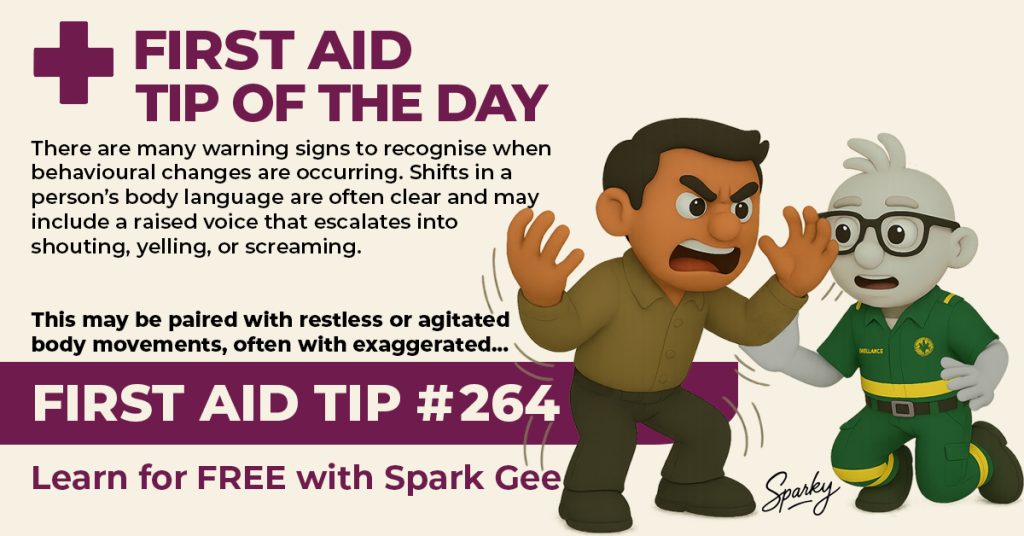
… hand gestures. They might seem afraid without reason, overly emotional, and at times progressing into complete panic. A…false perception of the environment or the people nearby may also be present. These changes in perception can result in aggression or violence directed toward others, accompanied by bizarre actions and interactions where rational responses are absent.
As noted in NZRC/ANZCOR guidance, such behaviours can range from distress and agitation to severe aggression, often linked to underlying medical, psychiatric, or situational causes. Responders should approach with caution, prioritising safety, maintaining distance, and using calm verbal de-escalation strategies. Avoid confrontation or physical restraint unless absolutely necessary to prevent immediate harm, and call for professional support early.
It is important to remember that abnormal behaviour during a medical emergency is often a symptom of an underlying problem—such as hypoxia, hypoglycaemia, intoxication, head injury, infection, or a mental health crisis. Recognising these signs, ensuring safety, and seeking urgent professional help provide the best chance for safe and effective care.
Tomorrow we turn to the vital question of safety—how to manage the scene when someone is displaying behavioural changes.
For great health information, check out Health Navigator New Zealand, where you will find expert opinion online.

Click here to learn more and find out how you can learn first aid for FREE
Access our learning resources by clicking the images below.

Click here to find out how you can learn first aid for FREE
To learn more from the experts about previously covered conditions, click their logo below.


Acknowledgement
Data and information are fact-checked against various recognised sources, including the New Zealand Resuscitation Council, Health Navigator New Zealand, St John, and other recognised entities specialising in the specific subject content. It should be noted that variances in protocols exist and, where necessary, are identified.