
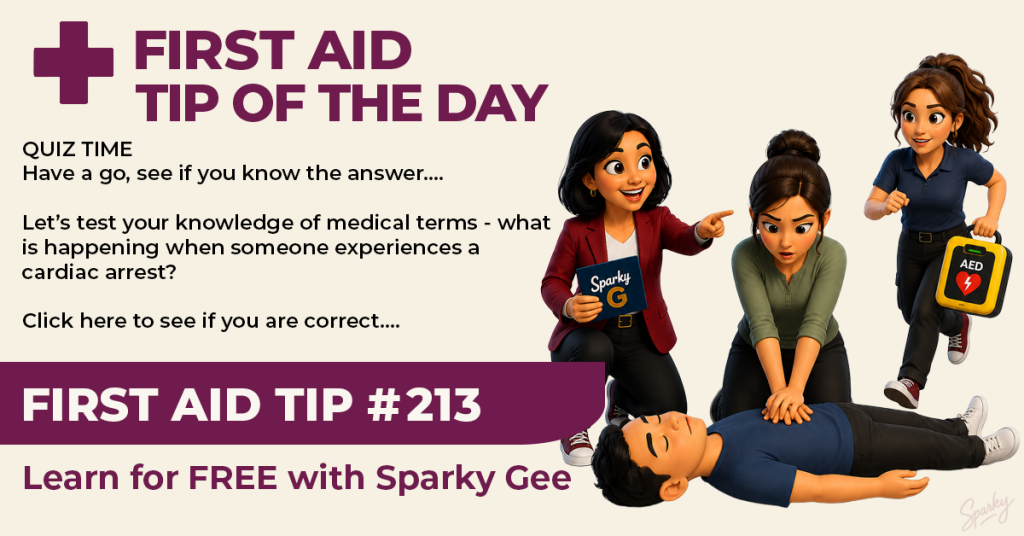
…..Answer: The heart has stopped pumping blood effectively around the body.
A person in cardiac arrest will be unresponsive and will not be breathing normally. They may be completely still, or they may make occasional abnormal gasping sounds. These gasps are not normal breathing.
Without immediate action, the brain and other vital organs are rapidly deprived of oxygen.
Follow DRSABCD:
- Check for danger
- Check for a response
- Send for help and call 111
- Open the airway
- Check for normal breathing
- Begin CPR if they are not breathing normally
- Attach an AED as soon as possible
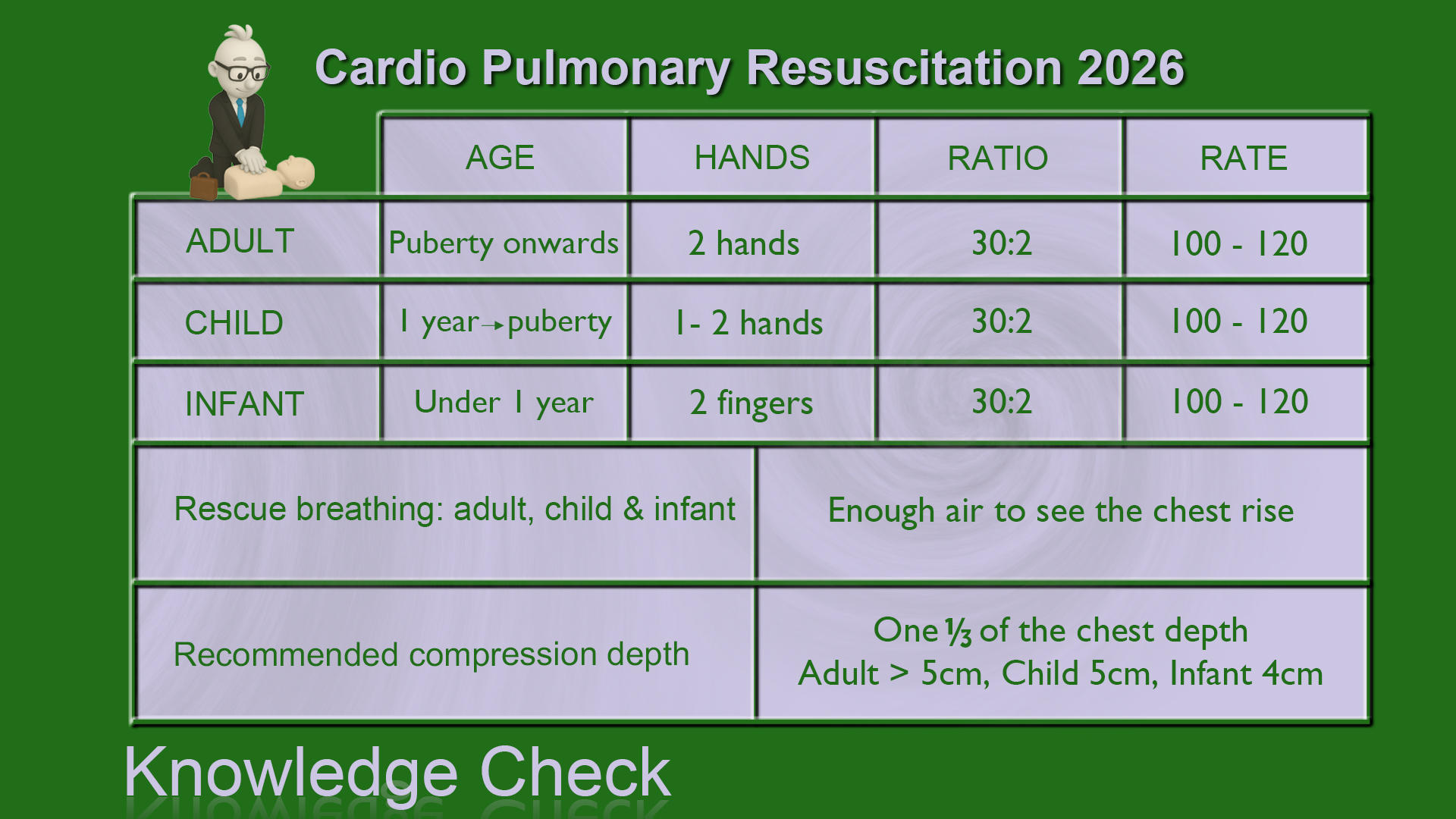
Give 30 chest compressions followed by 2 breaths, if willing and able. Compress the centre of the chest at a rate of 100–120 compressions per minute and to approximately one-third of the chest depth.
Continue CPR and follow the AED’s prompts until the person shows signs of life, emergency personnel take over or you are physically unable to continue.
Tomorrow, we unpack contusions and haematomas and explain how a “bruise” can be serious.
For great health information, check out Health Navigator New Zealand, where you will find expert opinion online.

Click here to learn more and find out how you can learn first aid for FREE
Click the images below to access our learning resources.

Click here to find out how you can learn first aid for FREE
To learn more from the experts about previously covered conditions, click their logo below.

Acknowledgement
Data and information are fact-checked against various recognised sources, including the New Zealand Resuscitation Council, Health Navigator New Zealand, St John, and other recognised entities specialising in the specific subject content. It should be noted that there are variances in protocols, which are identified where necessary.