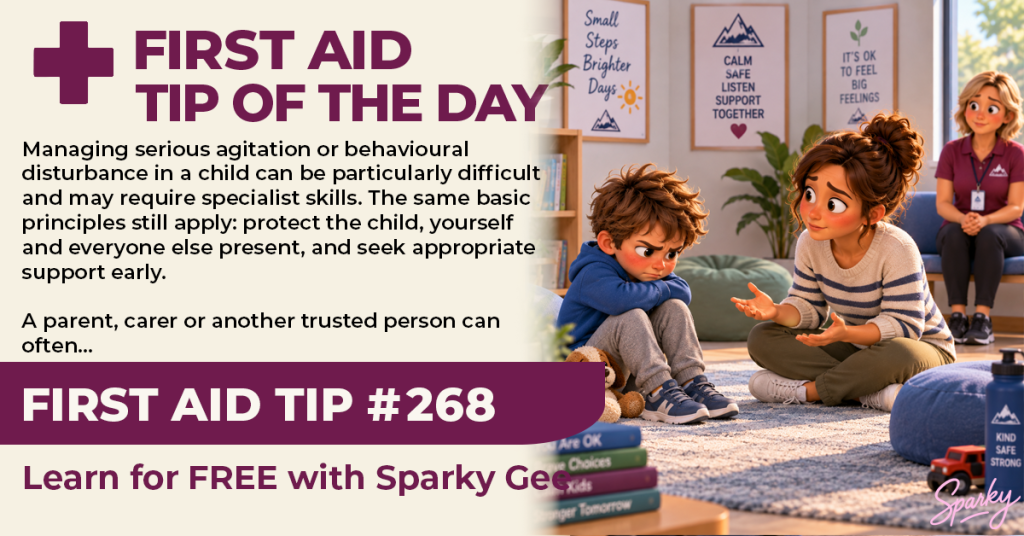
…provide valuable help in understanding and calming the child.
They may know what has triggered the behaviour, how the child normally communicates and which strategies have worked previously.
The approach should always be adjusted to the child’s age and individual needs.
Simple age-appropriate distraction, such as a familiar toy, may help some children. Reduce unnecessary noise, crowds and other stimulation where possible.
Don’t automatically touch or physically restrain a distressed child. Give them space and use gentle interaction appropriate to their needs.
ANZCOR specifically recommends avoiding physical restraint of agitated or behaviourally disturbed people because restraint can escalate violence and cause injury to both the person and the first aider.
When specialist assistance is needed, seek it early.
Tomorrow: A distressed child may need a very different approach—and the person who knows them best can sometimes be your greatest help.
For great health information, check out Health Navigator New Zealand, where you will find expert opinion online.

Click here to learn more and find out how you can learn first aid for FREE
Click the images below to access our learning resources.

Click here to find out how you can learn first aid for FREE
To learn more from the experts about previously covered conditions, click their logo below.

Acknowledgement
We fact-check data and information against recognised sources, including the New Zealand Resuscitation Council, Health Navigator New Zealand, St John, and other recognised entities specialising in the specific subject content. Protocols vary, and we note differences where necessary.