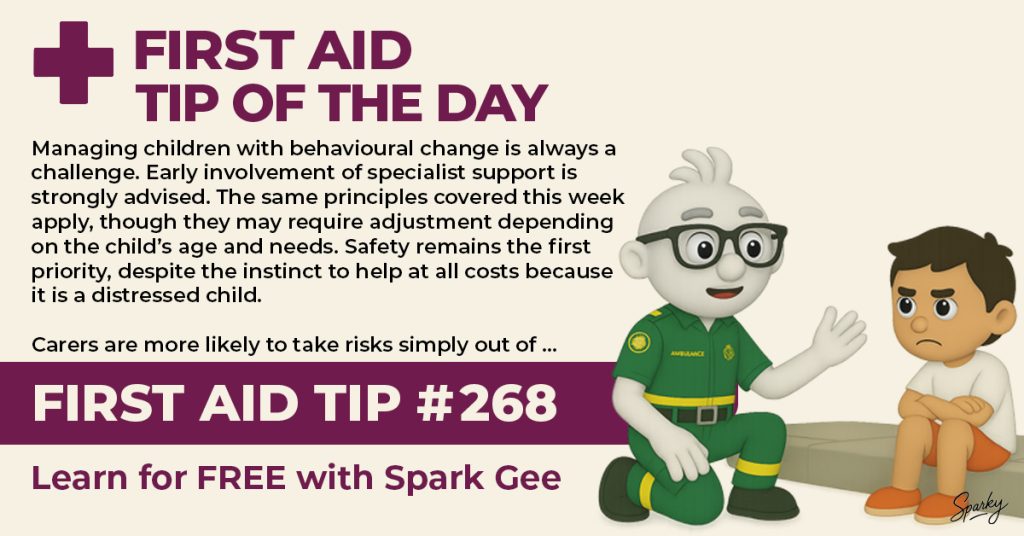
…concern. Your safety, others present, and finally the welfare of the child are the key priorities. If a parent, caregiver, or trusted family member is present, their involvement can be very helpful in reducing distress and supporting a safe response. They may also provide valuable information about the child’s medical history, current condition, triggers, or calming strategies.
Distraction techniques can also play a vital role. Familiar items such as toys, books, or games may redirect focus and lessen agitation, helping to stabilise the situation until further help arrives.
As with all behavioural emergencies, scene safety comes first. Protect yourself and others, seek early professional support, and adapt communication and de-escalation techniques to the developmental stage and specific needs of the child. Remaining calm, patient, and respectful of the child’s perspective greatly improves the chances of a safe outcome.
Tomorrow we’ll begin our look at First Aid Kits—a well-prepared kit is more than just a box of supplies, it’s your first line of defence in an emergency.
For great health information, check out Health Navigator New Zealand, where you will find expert opinion online.
Click here to learn more and find out how you can learn first aid for FREE
Access our learning resources by clicking the images below.


Click here to find out how you can learn first aid for FREE
To learn more from the experts about previously covered conditions click their logo below.

Acknowledgement
Data and information are fact-checked against various recognised sources, including the New Zealand Resuscitation Council, Health Navigator New Zealand, St John, and other recognised entities specialising in the specific subject content. It should be noted that variances in protocols exist and, where necessary, are identified.