
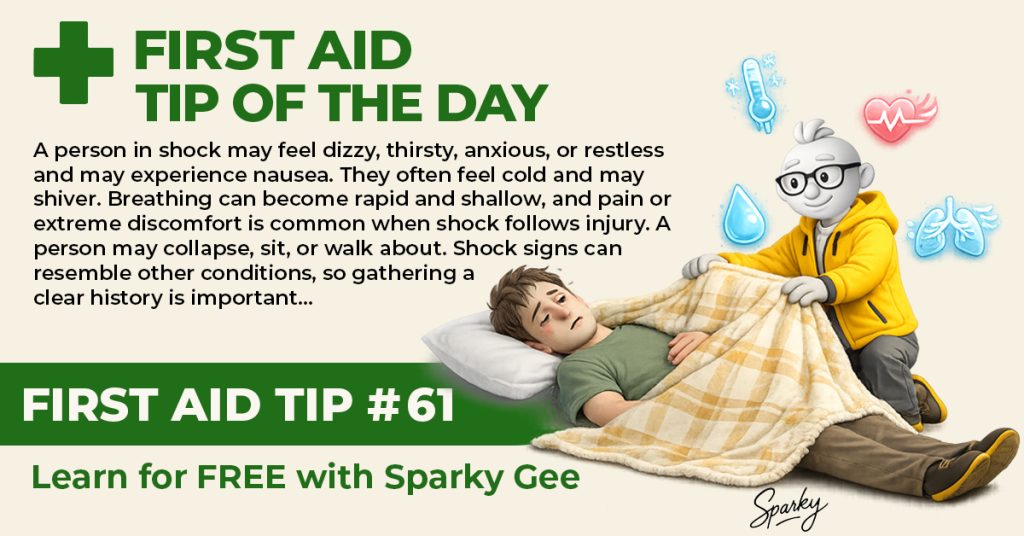
As shock progresses, a rapid pulse and breathing are common, later becoming weak and slow. Skin may become pale or clammy, and responsiveness may decrease. Confusion, vomiting, fever with low body temperature, rashes, or reduced urine output may also occur.
Another major cause of shock is cardiac failure, where insufficient blood leaves the heart, such as during a heart attack or serious abnormal heart rhythm. Shock may occur with cardiac events, but it is not always present.
Tomorrow, we review how to manage a person in shock
For great health information, check out Health Navigator New Zealand, where you will find expert opinion online.

Click here to learn more and find out how you can learn first aid for FREE
Click the images below to access our learning resources.

Click here to find out how you can learn first aid for FREE
To learn more from the experts about previously covered conditions, click their logo below.

Acknowledgement
Data and information are fact-checked against various recognised sources, including the New Zealand Resuscitation Council, Health Navigator New Zealand, St John, and other recognised entities specialising in the specific subject content. It should be noted that there are variances in protocols, which are identified where necessary.