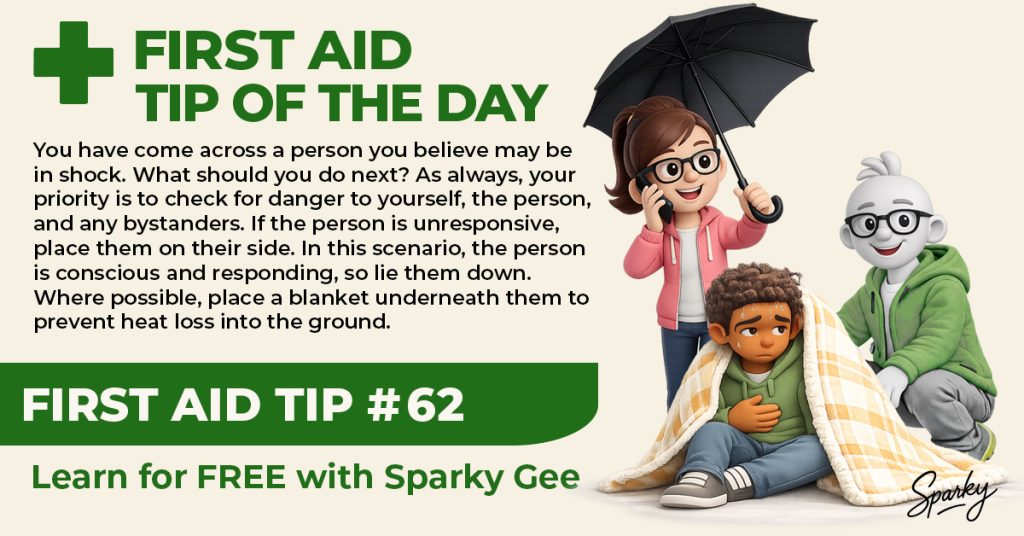

Check carefully for life-threatening bleeding, including the torso, limbs, head, ears, eyes, nose, and mouth. In this situation, no bleeding is found.
So what comes next?
We’ll reveal the answer in tomorrow’s tip — check back to see if you were right.
Abnormal widening of blood vessels
This type of shock occurs when blood vessels widen suddenly, causing blood pressure to drop.
- Severe infection can lead to septic shock, a life-threatening condition where organs begin to fail
- Other causes include anaphylaxis, spinal or brain injury, and fainting
Some causes are short-lived, but others require urgent medical care.
Tomorrow we look at calling for help and treating the cause.
For great health information, check out Health Navigator New Zealand, where you will find expert opinion online.

Click here to learn more and find out how you can learn first aid for FREE
Click the images below to access our learning resources.

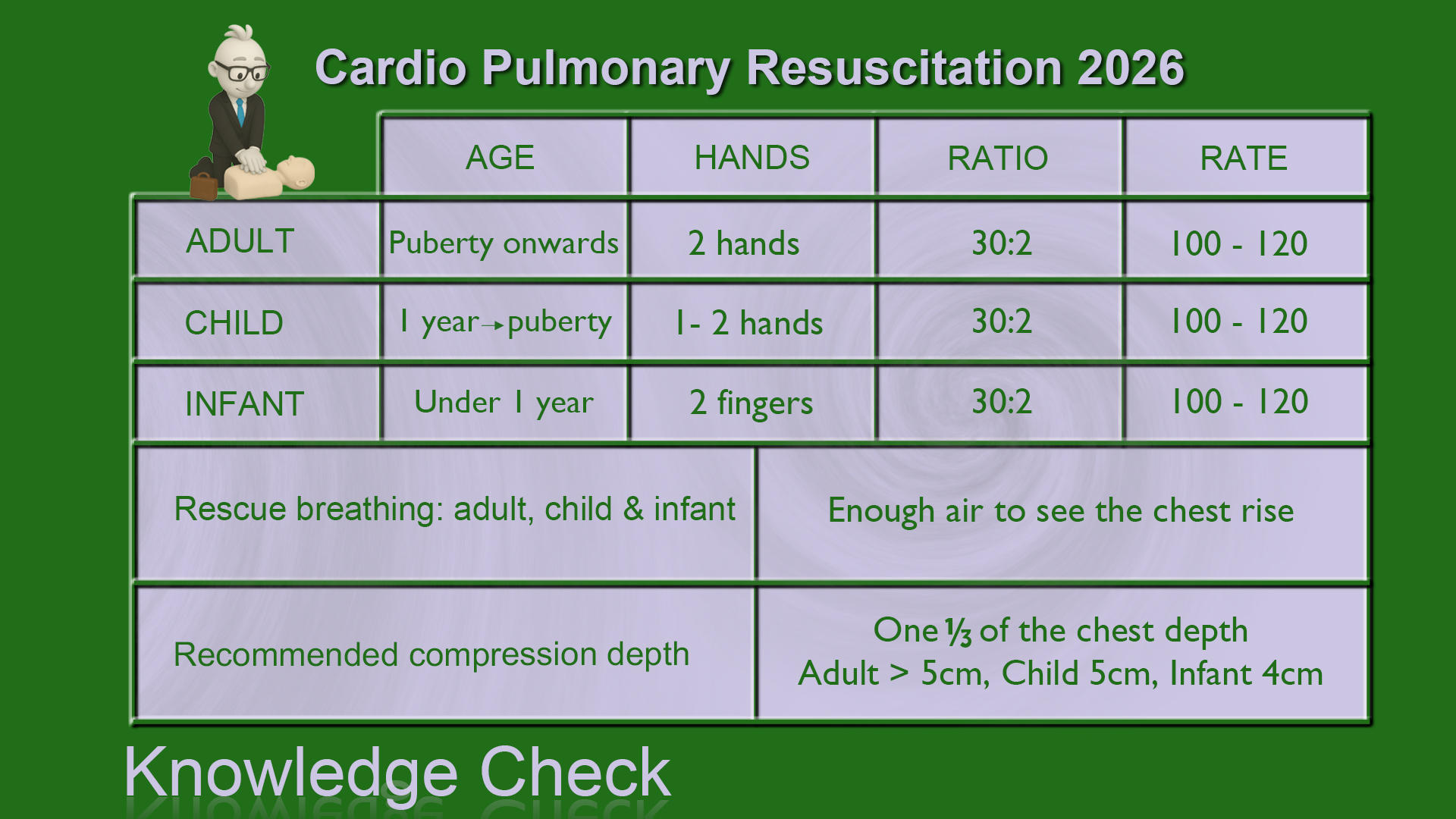
Click here to find out how you can learn first aid for FREE
To learn more from the experts about previously covered conditions, click their logo below.

Acknowledgement
Data and information are fact-checked against various recognised sources, including the New Zealand Resuscitation Council, Health Navigator New Zealand, St John, and other recognised entities specialising in the specific subject content. It should be noted that there are variances in protocols, which are identified where necessary.