
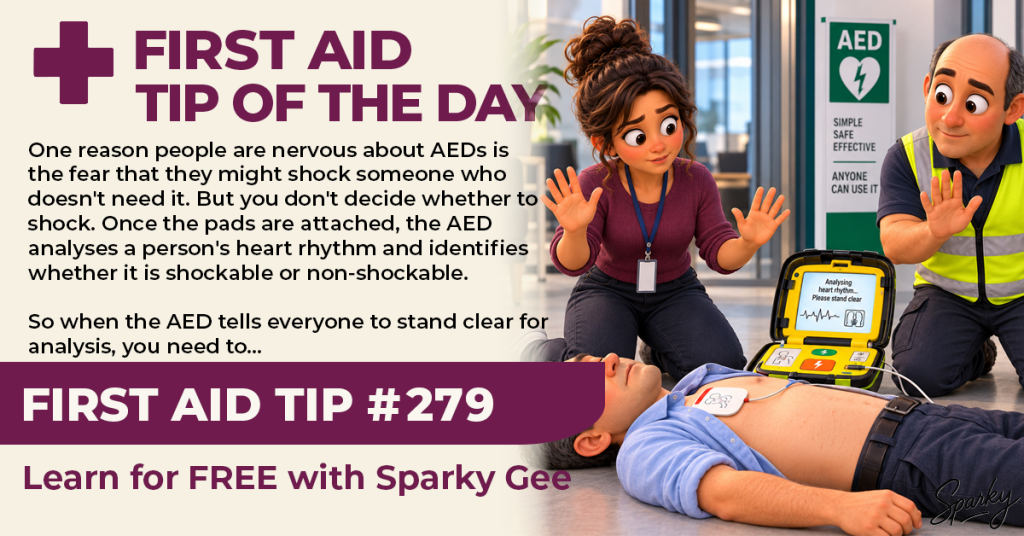
…make sure nobody is touching the person.
Follow the AED’s prompts exactly.
If it determines that a shock is required, it will instruct you accordingly. If the rhythm isn’t shockable, it won’t tell you to deliver one.
Once analysis or a shock is complete, resume CPR promptly when instructed.
AED technology has made defibrillation part of basic life support precisely because the machine can accurately analyse the rhythm.
You don’t need to interpret an ECG—the AED does that job for you.
Tomorrow: we’ll meet one of the abnormal rhythms an AED is designed to recognise: ventricular fibrillation.
For great health information, check out Health Navigator New Zealand, where you will find expert opinion online.

Click here to learn more and find out how you can learn first aid for FREE
Click the images below to access our learning resources.

Click here to find out how you can learn first aid for FREE
To learn more from the experts about previously covered conditions, click their logo below.

Acknowledgement
We fact-check data and information against recognised sources, including the New Zealand Resuscitation Council, Health Navigator New Zealand, St John, and other recognised entities specialising in the specific subject content. Protocols vary, and we note differences where necessary.